Lorraine (Rainey) Cobcroft
AUTHOR


“Legal secretary. Must be able to operate a word processor or willing and able to learn quickly.”
What the heck is one of those? (This is 1979, remember!)
I phoned and asked for instructions on how to apply.
“Interview Friday afternoon 5pm,” the receptionist replied. Just like that. No formal application. No anxious wait for a response. No questions about qualifications. Just turn up on Friday afternoon. What a terrible time for an interview, though!
I dressed carefully. I told myself a thousand times I wasn’t nervous and I could do this - whatever ‘this’ was. I marched into that office to be introduced to a lawyer who greeted me with words, “Oh no! Not another applicant. And at this late hour. I’ve interviewed over 20 and every single one of them ran away frightened when they saw the machine. I just want to go home!”
Hmmm. Great start! Not exactly what you expect at a job interview.
“What machine>” I asked.
“Let me show you. Come.”
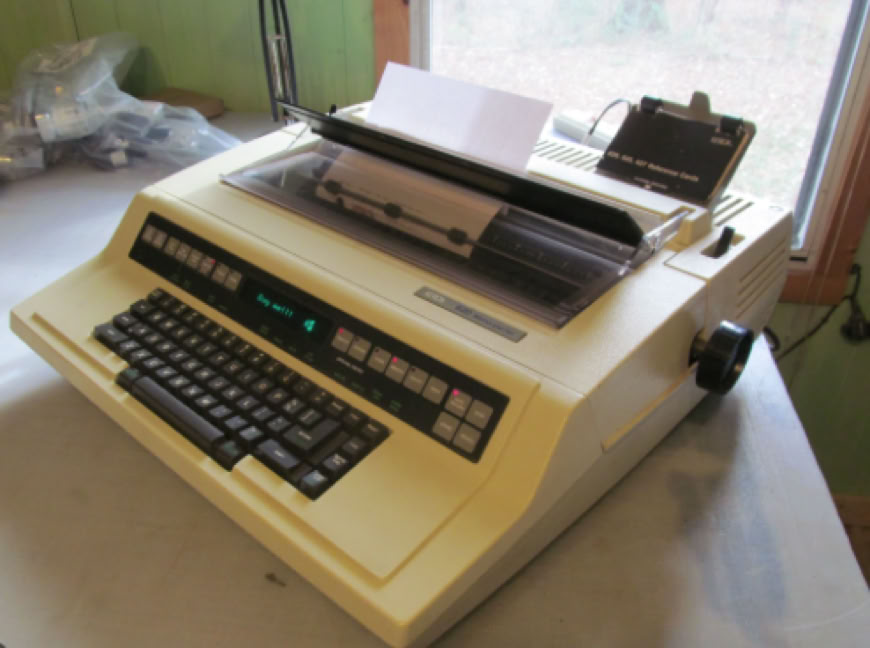
So I followed him down the hall and into a small room in which there was a desk on which perched a rather large typewriter of sorts.
“It’s a word processor,” he explained, now with an air of superiority and enormous pride. “State of the art. Very expensive, but I thought it would make my secretary’s job easier. Everyone is scared of it, it seems. They come in boasting about their typing and shorthand speeds, but when they see this, they run away.”
“I don’t do shorthand,” I said. I didn’t add that I was a very slow and rather terrible typist.
“No need,” he said. “I prefer to use a dictaphone. You can transcribe directly from the tape.
I had never used one of those either, but hey, anything others can do, I can learn
“How does this work? It looks like a typewriter, but what’s the dial on the side for.
“It remembers everything you type. Each number on the dial is a page. It can save the page, and then reprint it over and over as needed, just by you selecting the number on the dial and pressing Print. And if you need to take changes, you dial up the page, count down the lines and characters on the printout to the point where you want to make a change, then use the arrow keys to move to that point, delete, and type over. (Word processors back then didn’t feature a screen, but a typewriter with a memory? That was amazing.)
“It cost me over $10,000,” he said. “And I can’t find anyone who can use it.”
“Well, I’ve never used one, but I can learn,” I said, apparently sounding competely confident. “Give me a week unpaid trial to prove myself.” (Was I completely insane!? Probably!)
“I won’t give you a week unapid,” he said, “but you are hired, on probabion. Let’s give it a couple of weeks… on full pay of course... and then we’ll see.”
I stayed in that job for over a year. At one point, the Xerox representative who had sold the machine offered me a job demonstrating it. He said typists were notoriously bad at using it because they didn’t appreciate the ease of fixing errors, so they used it like a typewriter and didn’t take advantage of its power. I’d have taken the job except that it involved travel, and I had a family to consider.
The work was interesting - mostly typing papers proposing law reform. There was a hazard, though, that led, on occasions, to some lucrative weekend overtime. One of the lawyers in the firm was quite old and a little doddery. I had a habit of setting the machine to print several copies of a paper I had prepared and then retiring to the tea room while it did its thing. This doddery old fellow would often pop into the tea room to announce, “The machine was going by itself, so I turned it off.” The problem with that was that turning it off deleted the entire memory…. Al 50 pages. (There were 50 numbers on the dial.) If the work happened to be a contract for a client who had a tight deadline for progressing a deal, I would then be asked to come in on Saturday, at double time pay of course, to re-type all those pages.
I have to admit I didn’t much like the lawyer I worked for, nor the other people in the firm, but I loved that machine. It started a love affair with computers that eventually led to me founding an IT company. But that was many years into the future. If you had told me, in 1979, what lay ahead, I would have died laughing. But one thing I knew even way back then: this machine was the beginning of a new era for authors, and one that would pave the way for many who could only ever yearn to write a novel to fulfil their wildest dream.